01
Intent Is Blended
Brand, generic, competitor, discovery, and placements share budgets or reporting, hiding which demand is incremental and scalable.
Apple Ads · Formerly Apple Search Ads
Grovix turns App Store search demand into a controlled acquisition system by connecting campaign structure, query relevance, product-page conversion, and downstream user value.
Best for iOS growth teams that can define acquisition economics and want more control than blended campaigns or platform CPA alone can provide.
The Growth Constraint
Apple Ads can reach users close to install, but mixed intent, weak negatives, generic product pages, and shallow reporting can make an apparently healthy account expensive to scale.
01
Brand, generic, competitor, discovery, and placements share budgets or reporting, hiding which demand is incremental and scalable.
02
A strong query lands on a generic listing whose screenshots and benefits do not continue the user's reason for searching.
03
Campaigns are judged on installs while subscription, purchase, retention, payback, and organic cannibalization remain unclear.
The Engagement
The first engagement isolates structural, relevance, and measurement risk before Grovix recommends a restructure, management cadence, or budget expansion.
Campaign and economics audit, controlled restructure, or ongoing Apple Ads management with explicit bid and budget guardrails.
Timing
Timing is confirmed after reviewing account size, storefronts, spend, and measurement maturity. The audit produces the first prioritized action plan before material account changes.
Our Method
Structure creates clarity; search-term learning and product-page relevance create scalable decisions.
Brand, generic, competitor, and discovery demand receive distinct budgets, bids, negatives, KPIs, and incrementality expectations.
Discovery finds useful queries; validated terms move into controlled exact-match campaigns or tightly themed groups with cross-negatives.
We expand only where query intent, App Store metadata, creative, product-page conversion, and downstream economics support the next bid or market.
Engagement Scope
The scope is shaped around the constraint in your account, not a prebuilt checklist applied to every advertiser.
Search Results, Search Tab, Today Tab, and Product Pages are separated where used; each placement has its own role, budget, and success criteria.
Broad match and Search Match are controlled discovery inputs. Winners graduate to exact targeting; irrelevant or duplicate demand is excluded.
Bid bands, CPT ceilings, impression-share context, spend thresholds, and guardrail rules translate unit economics into daily decisions.
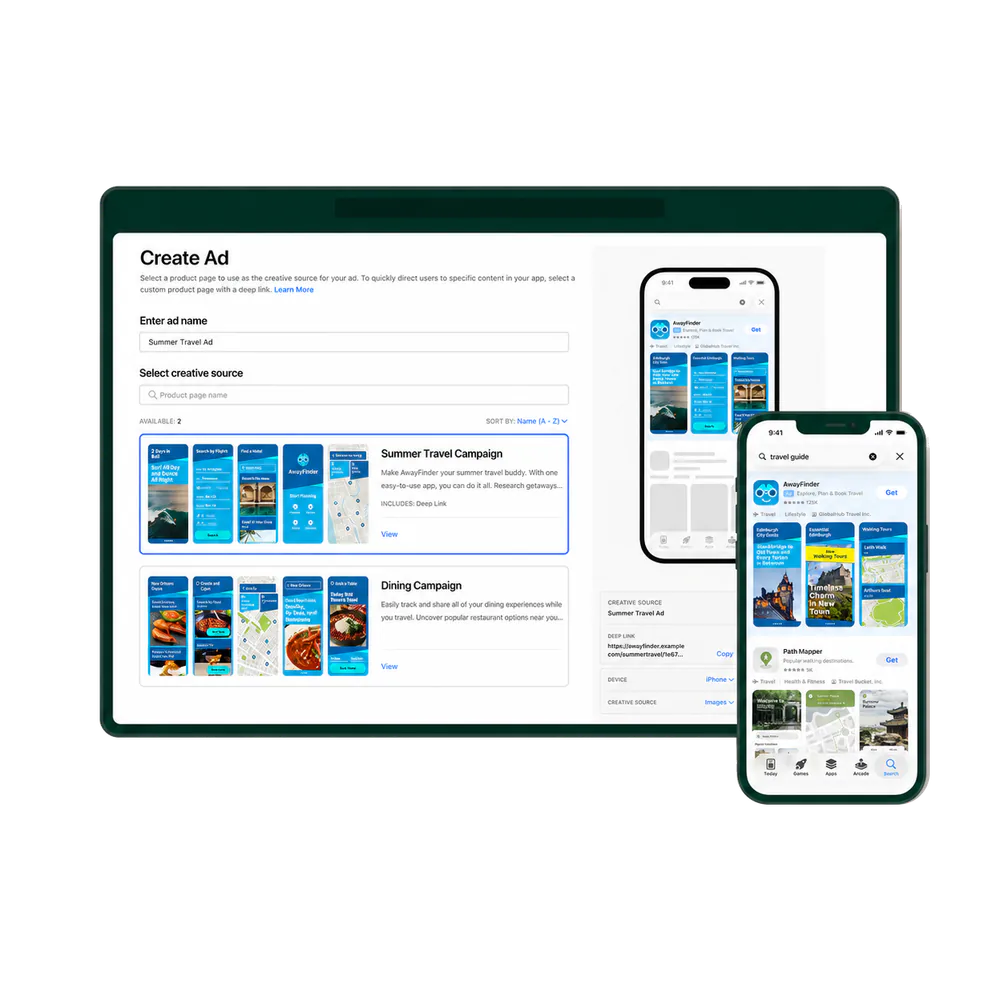
High-value keyword clusters route to product pages that continue the user's exact problem, use case, audience, or benefit.
Paid search reveals intent and conversion gaps; ASO and creative improvements increase listing relevance and help lower acquisition friction.
We separate attributed performance from business contribution using brand-defense context, organic movement, retention, proceeds, and cohort payback.
Engagement Outputs
Every structural, bid, keyword, and creative action should answer a defined business question.
We reconcile structure, search terms, negatives, bids, budgets, placements, storefronts, conversion, and the downstream metrics available.
We protect learning and continuity while separating intent, cleaning overlap, establishing bid ceilings, and mapping priority themes to the right product pages.
Search terms graduate or exit, bids respond to evidence, creative gaps become tests, and results are read against cohort maturity and business guardrails.

Engagement Fit
The strongest engagement starts with a clear product, realistic demand, and access to the signals needed to distinguish cheap installs from valuable users.
Good fit · 01
You run Apple Ads Advanced and need better control over intent, bids, negatives, or storefronts.
Good fit · 02
Brand performance looks efficient, but the team cannot explain cannibalization or incremental contribution.
Good fit · 03
Generic or competitor campaigns struggle to scale without CPA or payback deterioration.
Good fit · 04
Paid search, ASO, creative, MMP, and subscription data live in separate reporting conversations.
Measurement
No single platform metric can explain whether the account is truly creating profitable new demand.
Impressions, impression share, TTR, average CPT, search-term relevance, and coverage by intent, placement, storefront, and match type.
Install CVR, CPA or CPI, spend concentration, budget saturation, and product-page performance for each controlled traffic segment.
Activation, subscription or purchase conversion, retained revenue, payback, organic movement, and incrementality where the evidence supports it.
Apple Ads, MMP, store, subscription, and backend totals use different definitions and privacy paths. We document the source and cohort basis instead of forcing them to match one-to-one.
Start with a senior review of your structure, search terms, bids, relevance, and downstream measurement. You will leave with a prioritized account action plan.
Request a Campaign Audit